Trusted By
What We Offer
Simple solutions, powerful tools, and expert services to grow your online presence.
Digital Products
Code Packs & Plugins
Ready-to-use scripts, plugins, templates, and digital assets designed to solve real website problems and save development time.
Browse ProductsTools & Resources
Best Tools for Web Builders
Discover carefully selected tools, software, and platforms for web development, SEO, and digital marketing—tested and recommended for real results.
Explore ToolsServices
SEO, Ads & Web Development Solutions
Get expert help to fix website issues, improve search rankings, and run high-performing digital campaigns tailored to your business goals.
View ServicesFeatured Digital Products











Tools We Recommend







Our Services
Practical solutions to build, optimise, and grow your online presence.
Web Development Fixes
Small Tasks, Big Improvements
Need a layout fix, plugin setup, speed improvement, or feature adjustment? Get quick web development solutions without committing to a full project.
View Web Solutions
SEO Optimisation Tasks
Targeted Improvements That Boost Rankings
From technical SEO fixes to on-page optimisation and keyword adjustments, we solve specific SEO issues that hold your site back.
Boost Your Rankings
Digital Marketing Solutions
Smart Tweaks for Better Results
Get help with ad setup, tracking issues, campaign adjustments, and marketing tools to improve your performance without complex contracts.
Grow Your Businessalso available on fiverr
170+
Successful Projects
70+
Unique Clients
98%
5 Star Ratings
We’re also a Level 2 Seller on Fiverr with a strong track record of delivering high-quality projects.
If you prefer Fiverr’s secure payment and order system, you can hire me there as well.
The quality and communication stay exactly the same.
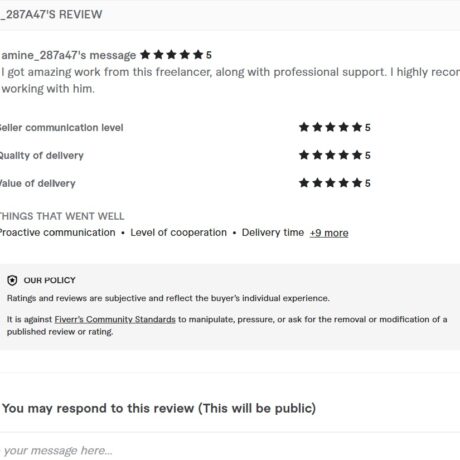
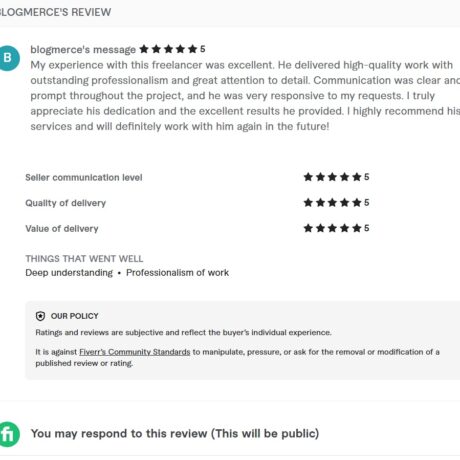
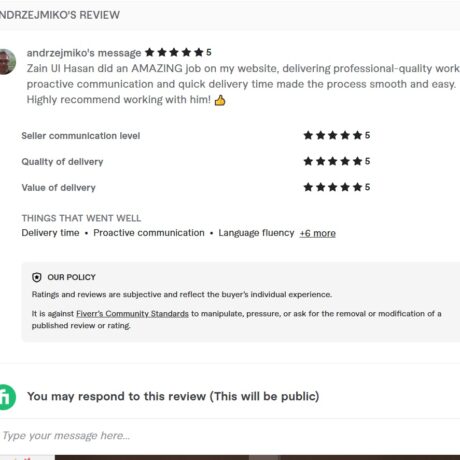
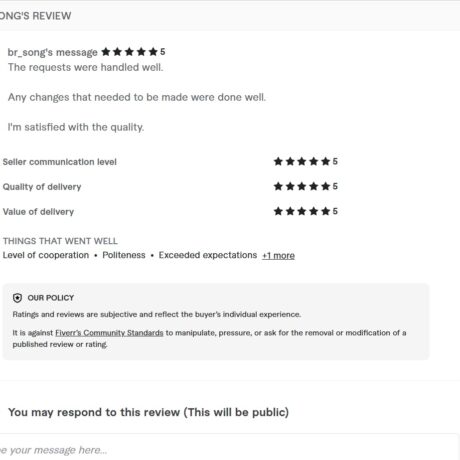
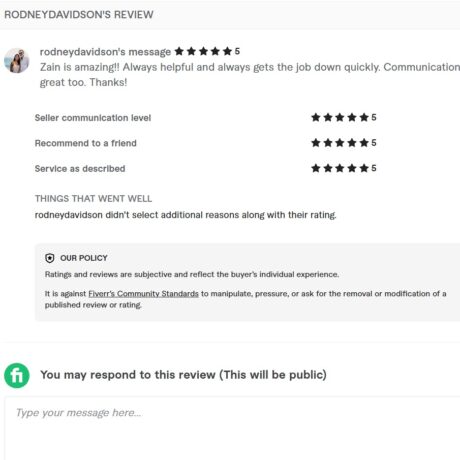
What Clients Say About Easecreature

What are the top translation methods for translation agencies?
The top translation methods for translation agencies are human translation, computer-assisted translation (CAT), and machine translation with post-editing. Human translation remains the gold standard where professional linguists manually translate documents, ensuring cultural nuance and context accuracy that automated systems often miss. The best translation companies employ native speakers who specialize in specific industries like legal, medical, or technical fields to deliver precise translations that maintain the original meaning and tone.
Computer-assisted translation tools help professional translators work more efficiently by storing previously translated segments in translation memories, ensuring consistency across large projects while reducing costs and turnaround times. Machine translation with post-editing combines artificial intelligence translation engines like Google Translate or DeepL with human review, where translators edit and refine the machine output to achieve publication-ready quality. The best translation companies often use hybrid approaches, selecting the most appropriate method based on document complexity, target audience, budget constraints, and delivery deadlines to provide clients with optimal results.
How to choose the right translation company?
To choose the right translation company, verify that the agency has certified translators who are native speakers in the target language and specialize in the relevant industry, whether legal documents, medical reports, technical manuals, or marketing materials. Select a company experienced in the specific field, as specialized knowledge ensures accurate terminology and appropriate cultural context. Check the company’s track record by reading client reviews or requesting references from businesses with similar needs.
Request sample translations to assess quality before committing to larger projects. Compare pricing structures clearly, understanding whether charges apply per word, per page, or per project, and confirm turnaround times match project deadlines. Ensure the translation company uses modern technology such as computer-assisted translation tools (CAT tools) and provides additional services (proofreading, editing, and localization) for projects requiring cultural adaptation beyond literal translation.
How to audit the right translation company?
To audit the right translation company, request their ISO certifications, particularly ISO 17100 for translation services, and verify these credentials with the issuing organizations to ensure compliance with international quality standards. Examine the company’s quality assurance processes, which must include multiple review stages such as translation, editing, and proofreading performed by different linguists. Request sample translations of the specific content type and have them evaluated by independent native speakers in the target language, or hire an external language auditor from another translation agency to compare source and target texts.
Review translator qualifications by asking for detailed profiles of assigned linguists, including educational backgrounds, professional certifications, years of experience, and industry specialization. Conduct reference checks by contacting at least three recent clients with similar projects, asking specific questions about accuracy, deadline adherence, communication quality, and satisfaction with the final deliverables.
How to communicate the right translation company?
To communicate with the right translation company, provide a clear project plan and translation workflow that includes detailed specifications about the target audience, preferred terminology, cultural context, and specific style requirements for documents or marketing materials. Establish a dedicated project manager as a single point of contact who coordinates between the client team and the translation company’s linguists, ensuring communications pass through one person to avoid confusion.
Define how project status and reports get shared with the team by setting up regular check-in meetings via email, phone calls, or video conferences, and request progress updates at specific milestones throughout the translation process. Share comprehensive reference materials such as glossaries, previous translations, brand guidelines, and competitor examples to help translators understand the company’s voice and industry standards. Maintain open feedback channels to discuss revisions, ask questions about translation choices, and provide clarifications promptly, as effective two-way communication ensures final translations meet expectations and deadlines.
What is a translation services provider?
A translation services provider is a company or professional that helps clients or businesses change written or spoken content from one language into another so that the message makes sense in the new language. Translation agencies handle many types of material, including legal contracts, websites, product manuals, marketing campaigns, medical documents, and personal papers (e.g. birth certificates). A translation services provider usually employs skilled translators who understand the words and the culture and context of two languages, ensuring that the meaning is accurate and precise.
A translation services provider offers additional services such as interpretation for live conversations, localization to adapt content for a specific country or region, and proofreading to make sure the translation reads naturally. Businesses rely on a language translation company to communicate with international customers, while clients use a translation services provider when moving abroad, studying overseas, or managing official paperwork. A translation services provider is a bridge that removes language barriers, enabling clients and organizations to share information and connect across cultures.
How to know a translation agency is certified?
To know if a translation agency is certified, follow the 12 steps listed below.
- Check the agency’s website for certifications such as ISO 17100, which is the international standard for translation services.
- Look for membership badges from trusted associations, like the American Translators Association (ATA) or the Institute of Translation and Interpreting (ITI).
- Verify certifications by visiting the official website of the certifying body and searching their member directory.
- Ask the agency to provide copies of certification documents or accreditation letters.
- Confirm that translators working for the agency hold relevant qualifications, such as degrees in linguistics or certified translator credentials.
- Review the agency’s quality assurance process, including proofreading and editing steps.
- Request references from past clients, primarily from government offices or courts that required certified translations.
- Examine the sample certificates or notarized translations the agency has completed.
- Inquire about the agency’s compliance with confidentiality and data protection standards.
- Validate claims about specialized certifications for medical, legal, or technical translation services.
- Search online reviews or business bureau records to check the agency’s reputation.
Contact certifying bodies directly to confirm the agency’s current certification status.
What is the hardest language to translate?
The hardest language to translate is Mandarin Chinese, although Arabic, Korean, Japanese, Thai, and Hungarian are recognized as highly complex. Mandarin Chinese poses unique challenges because it uses thousands of characters instead of an alphabet, relies heavily on context to define word meanings, and contains numerous homophones that sound the same but carry different meanings. The language demands deep cultural knowledge, as many concepts have no direct equivalent in English or other languages. For example, the word “guanxi” refers to social networks and influence in Chinese culture, while “renqing” expresses a sense of human obligation and favor that goes beyond simple friendship or duty. These cultural terms are layered with meanings that require more than a literal translation to convey their intent. Arabic is difficult due to its script, grammar, and regional dialects. Korean and Japanese require translators to manage honorific systems and context-based structures. Hungarian has an intricate grammar system that differs greatly from English. These languages are hard to translate because they have unique writing systems, distinct sentence structures, and cultural expressions that do not have direct equivalents in other languages, making the translator’s role complex and highly specialized.
What is the easiest language to translate?
The easiest language to translate is Spanish when translating between English and Spanish. Spanish comes from Latin, which influenced English, so the two languages share many cognates, such as “correcto” for correct, “delicioso” for delicious, and “ambulancia” for ambulance. English and Spanish have close matches like “atención” for attention and “cámara” for camera, which simplifies word recognition during translation. Spanish is phonetic, so words are pronounced as they are written, making spelling and pronunciation easier to understand. English and Spanish use the Latin alphabet and follow sentence structures that are relatively similar compared to other language pairs. These features, and thousands of shared vocabulary terms from common linguistic roots, make translation smoother and more accurate while keeping meaning and context clear.
Who owns Espresso Translations agency?
Espresso Translations Agency is owned by Danilo and Niki, two linguists who founded the company together in 2011. Danilo and Niki initially worked together providing translation services, starting with a few languages and gradually expanding their network to cover more European languages as demand grew. They formally established Espresso Translations as a specialized translation agency in 2012. Niki Leiper is a Director of the company and the Head of Project Management, while Danilo is Head of Marketing and actively involved in daily operations. Danilo and Niki continue managing translations and interpreting services, as well as the company’s growth into an international agency with over 2,000 translators covering more than 150 languages.
Does Espresso Translations have a refund policy?
Yes, Espresso Translations has a refund policy. The translation company provides a limited refund under specific conditions. Clients who remain dissatisfied after unlimited revisions within a 14 day period are allowed to submit a written request for a partial refund. Espresso Translations reviews each refund request, granting refunds only when the translator determines that the service failed to meet reasonable industry standards or the terms of the contract. The refund amount is proportional to the level of unsatisfactory work and does not exceed the total amount paid for the service. Espresso Translations does not issue refunds if clients fail to provide necessary feedback, submit revision requests on time, or request changes beyond the original service scope.
How to reach out to Espresso Translations?
To reach out to Espresso Translations, follow the steps listed below.
- Send an email directly to info@espressotranslations.com with a translation request or questions.
- Complete the online quote request form on espressotranslations.com.
- Upload documents through their online form system when requesting a quote.
- Specify translation requirements, including language pairs, document type, and deadline.
- Wait for a response from Espresso Translations with a competitive quote, usually within one hour.
- Communicate with the assigned Project Manager, who is the primary contact throughout the translation process.
- Use project management platform tools to submit requests through approved online platforms or software.
Latest Posts

Best Sellers
-
Sale!

Cap
Original price was: ₨18.00.₨16.00Current price is: ₨16.00. Add to cart -

Hoodie with Logo
₨45.00 Add to cart -
Sale!

Beanie
Original price was: ₨20.00.₨18.00Current price is: ₨18.00. Add to cart -
Sale!

Belt
Original price was: ₨65.00.₨55.00Current price is: ₨55.00. Add to cart -



V-Neck T-Shirt
Price range: ₨15.00 through ₨24.00 Select options This product has multiple variants. The options may be chosen on the product page